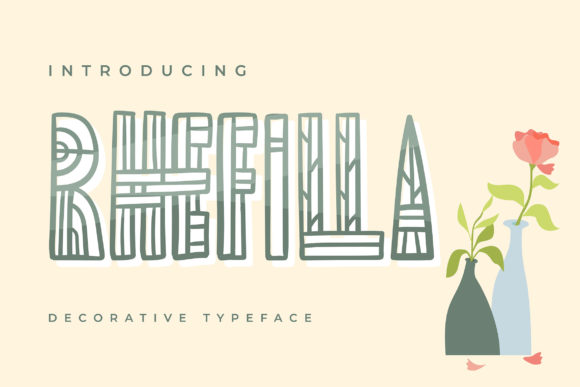
Rhefilla: A Decorative Typeface for Creative Projects
Rhefilla is a decorative typeface that offers a distinctive visual appeal, making it a compelling choice for designers and creators looking to elevate their work. This font combines elegance with artistic flair, providing a unique aesthetic that can enhance a variety of projects. Whether used in print or digital formats, Rhefilla adds a touch of sophistication and creativity.
For those involved in graphic design, branding, or personal crafting, Rhefilla presents an opportunity to stand out. Its intricate details and stylized letterforms make it ideal for applications where visual impact is important. However, like any typeface, it comes with its own set of considerations that users should evaluate before incorporating it into their work.
What Makes Rhefilla Unique?
Rhefilla distinguishes itself through its ornate design elements and the way it balances form and function. The font features subtle flourishes and curves that give it a handcrafted feel, making it particularly suitable for projects that aim to convey a sense of artistry or refinement. Unlike more utilitarian fonts, Rhefilla is not designed for everyday use but rather for specific creative contexts where style takes precedence.
The font’s structure allows for readability in certain sizes and settings, though it may not be the best choice for long blocks of text. Instead, Rhefilla shines when used as a headline, title, or focal point within a design. Its versatility across different mediums—such as posters, business cards, and social media graphics—makes it a valuable tool for designers seeking to add a personalized touch to their work.
When Rhefilla Is a Strong Fit
Rhefilla is particularly well-suited for projects that require a high level of visual interest and individuality. For instance, greeting cards, wedding invitations, and custom stationery often benefit from the font’s decorative nature. It can also be an effective choice for branding materials that aim to communicate a sense of luxury or creativity.
In addition, Rhefilla works well in quote-based designs, such as motivational posters or social media content that highlights inspirational messages. Its ability to draw attention makes it a good fit for headlines and promotional materials where the goal is to capture the viewer’s eye quickly.
Situations Where Alternatives May Be Better
While Rhefilla has its strengths, there are scenarios where other typefaces may be more appropriate. For example, in professional environments where clarity and legibility are paramount, a simpler sans-serif or serif font might be preferable. In such cases, Rhefilla could appear too ornate or distracting, potentially compromising the message’s effectiveness.
Additionally, users working on large-scale projects with extensive text, such as books or lengthy reports, may find that Rhefilla is not practical for body text. In these instances, a more readable font would be better suited to maintain readability and user engagement.
Benefits and Considerations
One of the primary benefits of using Rhefilla is its ability to add a unique visual identity to a project. It can help differentiate a design from others and create a memorable impression. This is especially useful in competitive markets where standing out is essential.
However, there are tradeoffs to consider. The font’s decorative nature may limit its usability in certain contexts, and it may not be compatible with all design software or platforms. Users should also be mindful of licensing terms, as some fonts may have restrictions on commercial use or redistribution.
Another consideration is the font’s scalability. While Rhefilla looks striking at larger sizes, it may lose clarity when used in smaller formats. Designers should test the font in various sizes and settings to ensure it meets their needs.
Practical Decision-Making Insights
Before deciding to use Rhefilla, it’s important to assess the specific goals of the project. If the objective is to create a visually engaging design that emphasizes style, then Rhefilla could be an excellent choice. However, if the focus is on functionality or broad accessibility, alternative fonts may be more suitable.
Users should also consider their target audience. A font like Rhefilla may resonate well with creative or artistic audiences, but it may not be the best fit for more traditional or formal settings. Testing the font in real-world scenarios can help determine whether it aligns with the intended message and audience expectations.
Finally, exploring similar fonts can provide a broader perspective. Comparing Rhefilla with other decorative typefaces can help users identify which options best match their creative vision and practical requirements.
Conclusion
Rhefilla offers a distinctive and stylish approach to typography, making it a valuable asset for creative projects that prioritize visual appeal. Its ornate design and versatility across different mediums make it a strong option for specific applications, such as branding, invitations, and promotional materials. However, its suitability depends on the context, audience, and overall design goals.
By carefully evaluating the strengths and limitations of Rhefilla, users can make informed decisions about whether it aligns with their needs. Whether used as a focal point or a subtle enhancement, Rhefilla has the potential to elevate a design and leave a lasting impression.