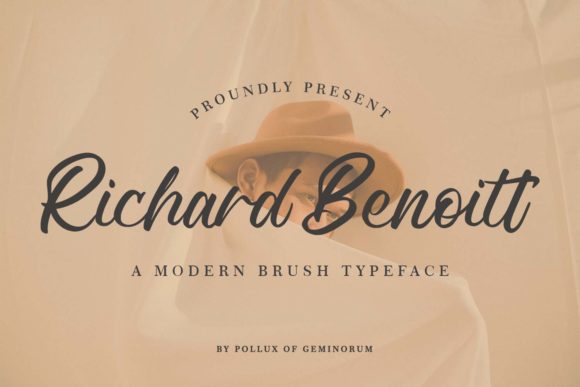
Richard Benoitt: A Timeless Font for Elegant Design
Richard Benoitt is a beautifully crafted handwritten font that brings a touch of sophistication and charm to any design project. Its elegant curves, smooth lines, and unique swashes make it a popular choice among designers, entrepreneurs, and creatives looking to add a personal and refined touch to their work. Whether you're designing wedding invitations, business cards, or social media graphics, Richard Benoitt offers a versatile and stylish solution that stands out from the crowd.
What Makes Richard Benoitt Stand Out?
One of the key features of Richard Benoitt is its PUA encoding, which allows users to access all of the glyphs and swashes without restrictions. This means you can easily customize your designs with unique characters and flourishes, giving your work a more authentic and handcrafted feel. The font also boasts a varying baseline, which adds visual interest and prevents the text from looking too rigid or monotonous.
Designed with both beauty and functionality in mind, Richard Benoitt is ideal for projects that require a handwritten touch. Its gorgeous glyphs and stunning alternates ensure that each letter looks intentional and well-crafted, making it perfect for everything from quotes and greeting cards to logos and branding materials.
Common Mistakes When Using Richard Benoitt
While Richard Benoitt is a powerful tool, there are several common mistakes that users may encounter when working with this font. One of the most frequent errors is not fully understanding the font's encoding and how to access its full range of characters. Without proper knowledge, users may miss out on the font’s most appealing features, such as its swashes and alternate glyphs.
Another mistake is using the font inappropriately for the intended purpose. While Richard Benoitt is beautiful, it may not be the best choice for large blocks of text or body copy. Its ornate style works best in smaller sizes and for decorative purposes rather than for long paragraphs. Overusing the font can lead to readability issues and a cluttered appearance.
How These Mistakes Can Affect Your Work
Ignoring the PUA encoding can result in limited design options and a less polished final product. If you’re unable to access all the glyphs, your designs may look generic or lack the unique flair that makes Richard Benoitt stand out. This can be especially problematic if you're creating custom designs for clients who expect high-quality, personalized work.
Using the font in the wrong context can also impact the overall effectiveness of your design. For example, if you use Richard Benoitt for a website’s main content, it may be difficult for readers to scan through the text, leading to a poor user experience. Similarly, applying it to a logo without considering its scalability could result in a design that doesn’t translate well across different formats and sizes.
Practical Tips for Getting the Most Out of Richard Benoitt
To avoid these pitfalls, start by familiarizing yourself with the font’s features and how to access them. Many design software programs, such as Adobe Illustrator or Photoshop, allow you to view and select alternate glyphs, so take the time to explore these options. This will help you create more dynamic and visually appealing designs.
When using Richard Benoitt, consider the size and placement of the text. It works best in smaller sizes for headings, titles, and decorative elements. For body text, opt for a more readable font that complements the elegance of Richard Benoitt without overwhelming the reader.
Examples of Better Approaches
Instead of using Richard Benoitt for an entire document, try pairing it with a simpler font for contrast. For instance, use it for a headline on a business card while keeping the body text in a clean sans-serif typeface. This creates a balanced and professional look without sacrificing style.
If you're designing a wedding invitation, consider using Richard Benoitt for the couple’s names and the event details. This adds a personal and elegant touch while ensuring the information remains easy to read. Avoid using it for the entire invitation, as it may become too ornate and hard to follow.
What to Check Before Using Richard Benoitt
Before incorporating Richard Benoitt into your design, make sure it’s compatible with the software and platforms you’re using. Some programs may have limitations on PUA-encoded fonts, so test the font in your workflow to ensure it functions as expected. Additionally, check the licensing terms to understand how you can use the font commercially or for personal projects.
It’s also a good idea to preview the font in different sizes and contexts. This helps you see how it looks in various applications and ensures it meets your design goals. If possible, request a sample or trial version before purchasing to get a better sense of its capabilities.
Conclusion: Elevate Your Designs with Careful Use of Richard Benoitt
Richard Benoitt is a versatile and elegant font that can enhance a wide range of design projects. However, its effectiveness depends on how it’s used and understood. By avoiding common mistakes and following practical tips, you can maximize the font’s potential and create designs that are both beautiful and functional.
Whether you're a designer, marketer, or small business owner, taking the time to learn about Richard Benoitt and its nuances will help you make informed decisions and achieve better results. With the right approach, this font can become a valuable asset in your creative toolkit.