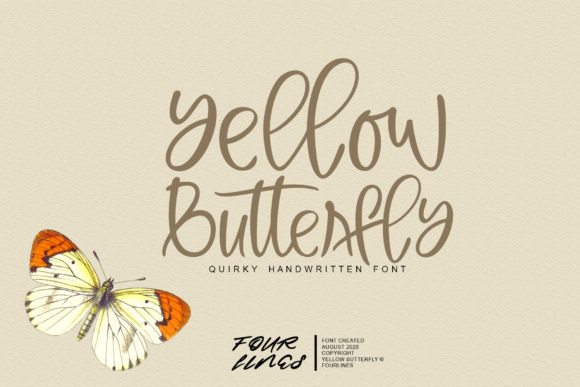
Yellow Butterfly: A Timeless Handwritten Font for Modern Design
In a world where digital design dominates, the human touch remains one of the most powerful elements in visual communication. Yellow Butterfly is a flowing and timeless handwritten font that brings this personal, authentic feel to any project. Whether you're designing wedding invitations, business cards, or social media graphics, Yellow Butterfly offers a unique blend of elegance and spontaneity that resonates with both creators and audiences.
This font stands out for its natural variation, smooth lines, and beautiful glyphs. Each character is crafted to mimic the subtle imperfections of handwriting, giving designs a more organic and approachable look. The varying baseline adds a dynamic quality, making it ideal for projects that require a sense of movement and fluidity.
Why Yellow Butterfly Matters in Today’s Design Landscape
As design trends continue to evolve, there's a growing appreciation for fonts that convey warmth and personality. In an era where many designs rely on clean, geometric typefaces, Yellow Butterfly offers a refreshing alternative. It bridges the gap between formal typography and casual handwriting, making it versatile enough for both professional and personal use.
The rise of remote work and digital communication has also shifted how people interact with visual content. With more designs being shared online, the need for fonts that stand out while maintaining readability has never been higher. Yellow Butterfly meets this demand by offering a distinctive style that captures attention without sacrificing clarity.
Moreover, the trend toward personalized and bespoke experiences has made handwritten fonts increasingly popular. From custom greeting cards to branded merchandise, there's a strong desire for designs that feel unique and meaningful. Yellow Butterfly supports this shift by allowing designers to infuse their work with a human element that connects with viewers on a deeper level.
Applications of Yellow Butterfly in Creative Projects
One of the most common uses for Yellow Butterfly is in wedding invitations. Couples often seek a font that feels personal and elegant, and this font delivers just that. Its flowing style complements romantic themes, while its legibility ensures that important details like dates and names are easy to read.
Thank you cards and greeting cards also benefit from the warmth of Yellow Butterfly. These pieces often aim to express gratitude or celebrate special moments, and the font's soft, handcrafted appearance enhances the emotional impact of the message. It can be used to create a cohesive design across multiple card types, ensuring a consistent and memorable brand identity.
For logos and business cards, Yellow Butterfly adds a touch of creativity and individuality. Entrepreneurs and small businesses looking to differentiate themselves can use this font to create a visual identity that feels authentic and trustworthy. Its versatility allows it to work well in both minimalist and more elaborate designs, depending on the desired aesthetic.
Quotes and social media graphics are another area where Yellow Butterfly shines. Whether it's a motivational quote for a blog post or a caption for an Instagram image, the font adds a personal flair that makes the content more engaging. It's especially effective when paired with bold colors or simple backgrounds, as it draws the eye without overwhelming the composition.
How Yellow Butterfly Fits Into Modern Workflows
Designers and creatives today often work within tight deadlines and limited resources. Yellow Butterfly simplifies the process by offering a font that is both visually appealing and easy to use. Its smooth lines and clear glyphs ensure that it works well across different mediums, from print to digital platforms.
With the increasing use of design tools like Adobe Illustrator, Canva, and Figma, having access to a high-quality font like Yellow Butterfly can streamline the creative process. It eliminates the need for manual drawing or complex adjustments, allowing users to focus on other aspects of their design work.
Additionally, the font's availability in multiple styles—such as regular, bold, and alternate versions—gives designers more flexibility. This variety enables them to experiment with different looks and find the perfect fit for each project. Whether they're working on a large-scale campaign or a small personal project, Yellow Butterfly provides the tools needed to achieve a polished result.
Trends and Future Directions in Handwritten Typography
Handwritten typography has seen a resurgence in recent years, driven by a desire for authenticity and connection. As more people turn to digital platforms for communication, the appeal of handwritten elements has only grown. This trend aligns with the values of many modern audiences who prioritize sincerity and individuality in the content they consume.
Looking ahead, we can expect to see more fonts like Yellow Butterfly that balance creativity with functionality. Designers will likely continue to explore ways to integrate handwritten styles into their work, using them to add depth and character to their designs. This evolution reflects a broader shift toward more expressive and emotionally resonant visual communication.
At the same time, the demand for accessible and user-friendly fonts will remain strong. As technology advances, the ability to easily incorporate custom fonts into design workflows will become even more important. Yellow Butterfly is well-positioned to meet these needs, offering a reliable and versatile option for a wide range of applications.
Recommendations for Using Yellow Butterfly Effectively
To get the most out of Yellow Butterfly, consider the following tips:
- Use it strategically: While the font is highly readable, it may not be suitable for long blocks of text. Instead, use it for headings, titles, and short phrases to maintain visual balance.
- Pair it with complementary fonts: Combine Yellow Butterfly with simpler, more structured typefaces to create contrast and enhance readability.
- Experiment with spacing: The font's varying baseline allows for creative layout options. Play with line spacing and alignment to achieve a unique and polished look.
- Test it across mediums: Ensure that the font works well in both print and digital formats. Adjust size and weight as needed to maintain clarity and impact.
By following these guidelines, users can maximize the potential of Yellow Butterfly while maintaining a professional and cohesive design aesthetic.
Conclusion: Embracing the Human Element in Design
In a fast-paced, digital world, the human element in design is more important than ever. Yellow Butterfly offers a way to bring that element into every project, whether it's a wedding invitation, a logo, or a social media post. Its flowing style, smooth lines, and elegant glyphs make it a valuable tool for anyone looking to add a personal touch to their work.
As design continues to evolve, fonts like Yellow Butterfly will play a key role in shaping the visual language of the future. By embracing this typeface, creators and professionals can stay ahead of trends while delivering work that feels authentic and meaningful.